Wednesday, August 28, 2013

WHAT'S THE DIFFERENCE?


What is the difference between perseverance and futility? I mean, when things don’t work out right should we stick to the task or just give it up as a waste of time? I once spoke to a frustrated young deputy who said, “We should just lock them all up. We’re getting nowhere.” Wait a minute, I thought, this kid’s way too young for this kind of cynicism. But it wasn’t merely cynicism; he was dealing with the flood of despair Law Enforcement Officers encounter on the job. Many days LEO's only see the bad side of people.

            I thought about that. As a minister I struggle with frustrating people and situations too. For Law Enforcement Officers, it’s part of the job. My wife, a teacher, talks about the same frustrations.
            So what are we supposed to do? How do we NOT surrender to futility? Well first, I think that frustration is not a sign of weakness. The fact that it bothers you shows you still have some hope.
            So I have three questions; First, what can we learn about ourselves? Am I in this only for a paycheck, or do I think the job really makes a difference? If I believe the job is worth the effort, I need to look for the good among the bad. I’m always surprised at how much good I find when I stop focusing on the garbage.
            Second, how can we use this knowledge to positively motivate one another? When I am frustrated I tend to turn inward. This is the opposite of motivation. I don’t mean to sound touchy-feely, but we all need an encouraging word once in a while. I find a simple Atta-Boy from my peers works wonders.
            Third, how can we NOT become discouraged by life’s apparent futility? Ah, that’s an “ultimate question;” my specialty. I find hope in the fact that I believe in God. Though it eludes us, there is a reason for existence. This helps me carry on when I don’t see an obvious reason beyond myself.
Keep at it. When Jeremiah complained to God about how hard his task was, the Almighty had a few choice words for the prophet. I’ll put the reply into LEO-ease; "If you’ve chased crooks on foot and they have worn you out, how will you keep up with their cars? If you stumble during a five-mile run, how do you expect to make a foot-pursuit through a dark alley?"
                              Jeremiah 12:5 (Don's Paraphrase)

Sunday, June 16, 2013

GOD IS EVER PRESENT


Vocatius Atque nonVocatius, Deus adent.
(Bidden or not bidden, God is present.)
                                         
Latin expression

Thursday, June 13, 2013

Repost: DOUBT

In the Bruce Willis movie, "TEARS OF THE SUN," there is an exchange between a priest and a nun upon learning their African mission church is under attack by rogue soldiers. The nun confides her fears to the priest who sternly rebukes her, saying she must have faith and not doubt. ...Okay, even I would encourage her to have faith in that situation. But, no doubts? Really? EVER?

I don't call that faith. I call that sticking your fingers in your ears, closing your eyes and chanting "La-la-la-la-la!" to life's challenges. I think you would have to have the nerves and imagination of a bag of cement to NEVER doubt.

Perhaps this in not what the screen writer meant to convey. Maybe he simply meant we should have faith in God and not doubt God's love. Maybe that's what he meant. But I still have a problem with this thinking. It shows a weak grasp of the reality of human nature and the true message the scriptures teach us about God's expectations in light of our many failings.

Doubt is normal. It is human to go into a situation wondering if it will work out; fearing it won't. Faith is not the absence of doubt. Faith is trusting that God is good and working for my good even when things are falling apart around me. As a young believer I really struggled with the meaning of faith because I was not working with a good definition.  I thought faith was something you felt--like love, or happiness, or seasickness. I did not know faith is something you do or don't do.

The Greek word used in the New Testament is "pestueo." It is eye-opening to realize it takes three English words to encompass the meaning of "pestueo:" faith, believe and trust. When we talk about faith we must  keep belief and trust in mind. It is one thing to say I have faith in that two hundred year old rocking chair. It is quite another to trust it to hold my considerable weight.

Put it another way: as a boy, my dad taught me to swim by standing in the deep end of the pool. "Jump," he'd say, "I'll catch you." When I jumped, I had faith in my dad. When I did not jump, it is because I did not believe he would really catch me.

Sometimes--even after my dad had caught me numerous times--I doubted. Did my dad give up on me? Disown me? No. He stood in the deep end and said, "Jump, I'll catch you." That is a much better picture of faith and doubt than some stained glass, philosophical exercise.

Some people turn up their nose at this reality. Like the fictional priest on "TEARS OF THE SUN" they
sternly demand perfection. Thank God the Almighty is a bit more realistic. I know, I know, someone will quote "be perfect for I am perfect" at me. But in fact, the word translated "perfect" in English actually means "mature," or "complete."

Aside from God, my favorite person in all the Bible is the man who brought his sick son to Jesus for healing. He says, "If you can do anything, help us." Jesus answered, "If you can’? Everything is possible for one who believes." The father's answer is classic: "I do believe; help my unbelief!" You know what? Jesus healed that boy and did not rebuke the father for doubt.


You are going to have doubts. The good news is you don't have to believe your doubts. You can doubt them.

Tuesday, June 11, 2013

MORE THAN JUST "JEWISH SURVIVAL"


Genesis 12:2-3 is the Abrahamic Covenant:


“I will make you into a great nation, and I will bless you; I will make your name great, and you will be a blessing. 3 I will bless those who bless you, and whoever curses you I will curse; and all peoples on earth will be blessed through you.”


Verse 2 is God’s Domestic Policy toward Abraham and his descendants, the Jews. Verse 3 is God’s Foreign Policy toward those people and nations who interact with the Jews.


Those who blessed the Jews have been blessed in return. But, through the ages many have tried to destroy the Jews. The Bible and history show how those attempts not only failed but returned back on those as a curse.


Monday, June 10, 2013

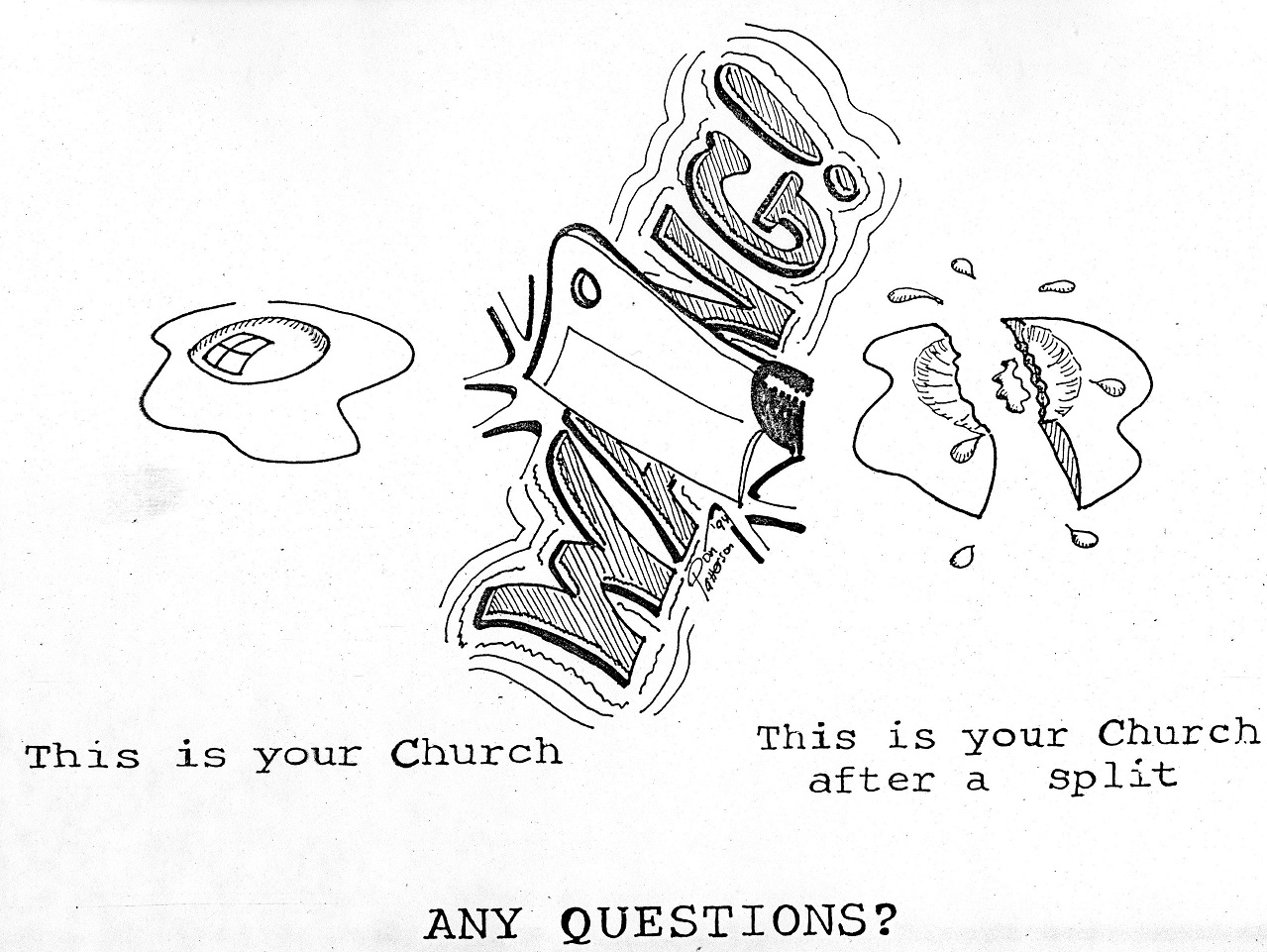
COMIX, ANYONE?


GREAT MOMENTS

Back in the '90s I did a series of single-panel cartoons for the Quartz Hill Journal of Theology. The Collection is called "Great Moments in Church History." I decided to begin posting them for your... er, enjoyment.


Tuesday, May 28, 2013

IT'S OFFICIAL: NO CANCER

Had a PET Scan done. Saw the Oncologist today for the results. He said definitely no cancer found in the whole body. He added that the scan results could not be better. I'm calling this good news.

UPDATE:

Doctor ran a CBC blood panel plus a thyroid check to see why I'm so tired. He said it had nothing to do with the Tamoxafil I'm taking. Should hear results by Friday.

Saturday, May 18, 2013

ESTHER: GOD USES THE STRANGEST PEOPLE

We're going through the Book of Esther at church. Here is the first message in the series.


Each year churches act out Christmas and Easter pageants. In the same way, Synagogues act out the story of Esther every March/April


Esther tells the story of a plot to make Genocide of the Jews the Official Policy of Persia. The story shows how God moves through his Providence to make sure his divine will is carried out on earth.


Cast of Characters


A.  King Ahasuerus: 
*          Something of a despot
*          Prone to change his mind

B.  Queen Vashti: 
*          Ahasuerus’ favorite of the Harem
*          Her refusal to put on a show caused a crisis

C.  Mordecai: 
*          A Jew who is a minor court official of Ahasuerus
*          He is loyal to the king AND his people

D.  Queen Esther: 
*          An orphaned Jew who becomes Ahasuerus’ Queen
*          Her Cousin Mordecai is her surrogate father

E.  Haman: 
*          The “Snidely Whiplash” character of the piece
*          Because he feels slighted by Mordecai, he decides 
                       to wipe out ALL the Jews

Sunday, April 14, 2013

THE GARDEN TOMB AND THE HOLY OF HOLIES

Have you ever noticed the similarities between the Garden Tomb and the Holy of Holies? (with thanks to Al Gansky for pointing this out)